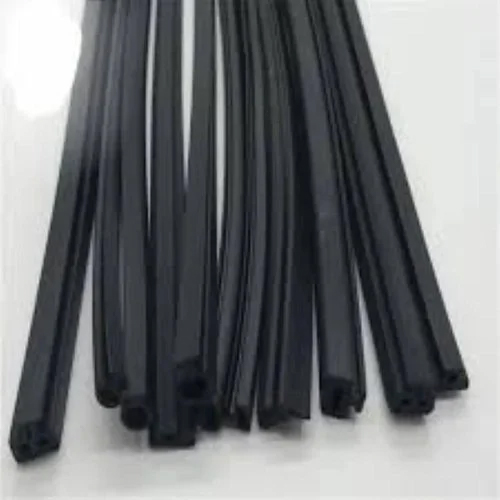
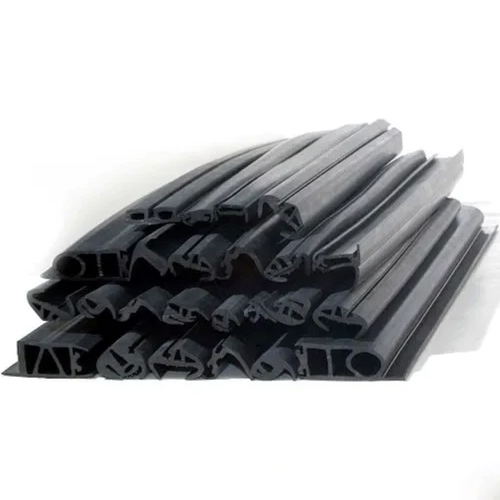
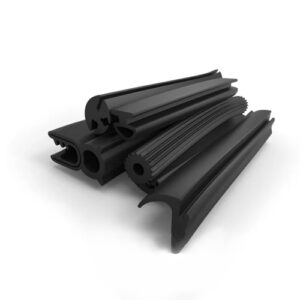
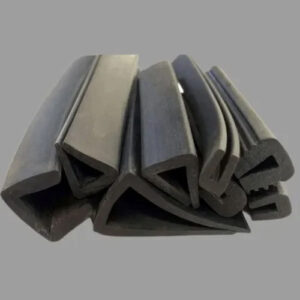
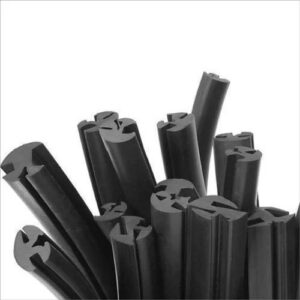
Architectural rubber profiles are specialized extruded elastomeric components designed for sealing, expansion control, edge protection, and vibration isolation in modern building and infrastructure applications. These profiles play a vital role in maintaining weather tightness, structural flexibility, and aesthetic finish by accommodating movement between building elements while preventing water ingress, air leakage, dust penetration, and noise transmission. Commonly manufactured from weather-resistant elastomers such as EPDM, architectural rubber profiles offer excellent resistance to UV radiation, ozone, temperature fluctuations, rain, and environmental aging, making them highly suitable for long-term outdoor and indoor architectural use. They are widely used in glazing systems, curtain walls, façade joints, doors and windows, skylights, expansion joints, panel connections, and cladding systems in residential, commercial, and institutional buildings. Architectural rubber profiles are available in a wide range of cross-sectional designs including glazing channels, gaskets, seals, spacers, U-profiles, H-profiles, and custom geometries developed to suit specific architectural details and movement tolerances. These profiles provide good elasticity, low compression set, and reliable recovery, ensuring consistent sealing performance despite thermal expansion, structural movement, and repeated environmental exposure. They can be supplied in continuous lengths or cut sizes and can be customized in hardness, dimensions, and profile design to meet project-specific functional, performance, and aesthetic requirements. Due to their durability, flexibility, and ability to integrate seamlessly into building systems, architectural rubber profiles are an essential component in contemporary construction and façade engineering.